


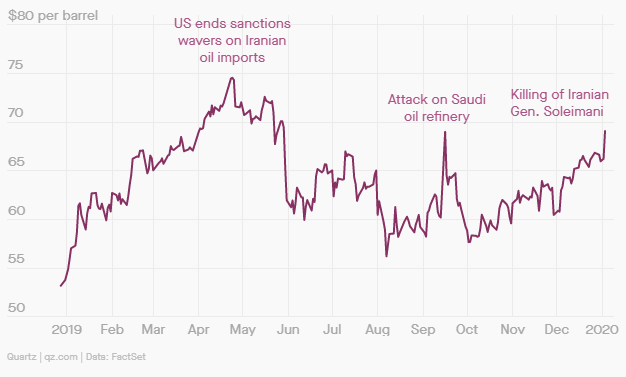
As the US confirmed the assassination of the Iranian Major General Qasem
Soleimani, January 2nd 2020, oil prices immediately began to rise. Dollar
denominated Brent Crude reflects the oil price moving up 4.27% in 16 hours. This
is the third time an Iranian linked political event has caused an oil price jump
in the last 12 months, further detail on the other events can be found here.
Brent Crude Oil Price, USD
To understand why Iranian political events can impact the price of oil, an
understanding of the geography in the Middle East is useful, specifically the
waterways. The Strait of Hormuz is a small but strategically important passage
off the coast of Iran. This straight provides a route between the Persian Gulf
and the Gulf of Oman, which thereafter leads into the Arabian sea and Indian
ocean. This frequently used oil transport route is estimated to be responsible
for the transportation of 25% of global oil supply. The passage is skirted by
Iran’s coast line and the bottle neck can, and has been used, to impact the
transport of the world’s oil. For this reason, among many others, any tension in
the region has the potential to spike oil prices.
But why should South Africans be concerned about oil prices and Middle
Eastern tension? One of the largest reasons why is due to the direct impact the
price of oil has on its derivative product fuel (diesel and petrol) and fuel
related companies, you can find an interesting discussion on this here. Looking
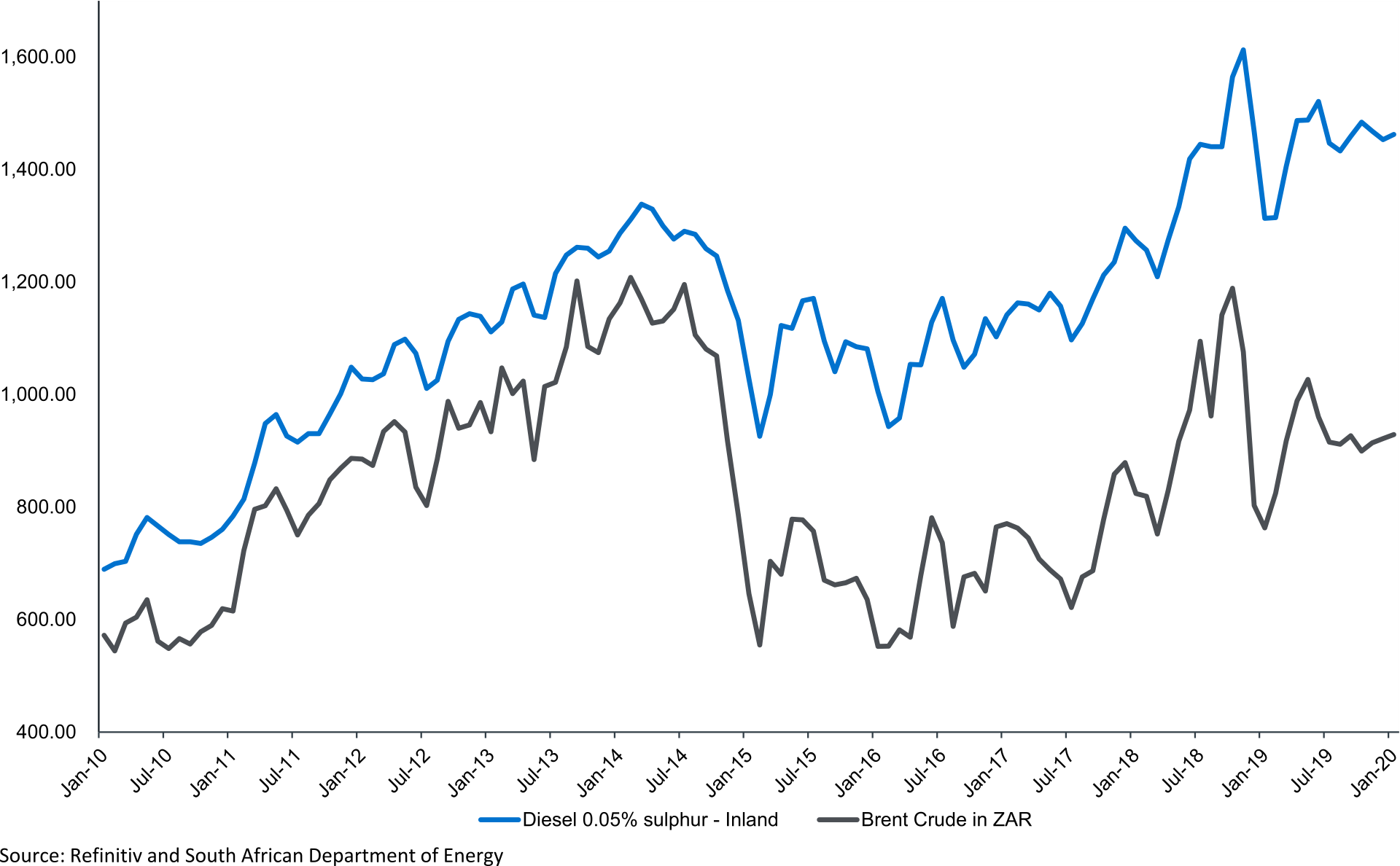
at a rand denominated Brent Crude price chart alongside the SA diesel price, you
can see how a change in the oil price impacts that of the diesel. In recent
months, the cost of fuel has become even more significant with petrol and diesel
run generators often keeping the lights on when unforeseen load shedding hits.
South African Diesel Price vs Oil
Secondary effects of the change in the oil price are also experienced through
the different components of inflation. To do this, focus must be placed on the
Consumer Price Index (CPI) transport component consisting of: purchase of
vehicles, private transport fuel and other running costs and public transport.
November 2019, latest data, boasts transport contributing -0.3% towards the
3.6% CPI data. Currently a negative number, continuing hikes in the price of oil
could drive this number north, leading to potentially higher inflation which
could harm consumers’ pockets.